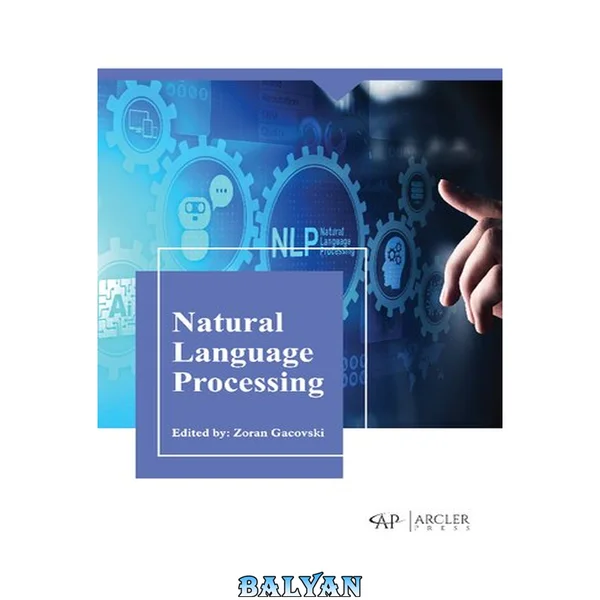
In response to the need for reliable results from natural language processing, this book presents an original way of decomposing a language(s) in a microscopic manner by means of intra/inter‐language norms and divergences, going progressively from languages as systems to the linguistic, mathematical and computational models, which being based on a constructive approach are inherently traceable. Languages are described with their elements aggregating or repelling each other to form viable interrelated micro‐systems. The abstract model, which contrary to the current state of the art works in intension, is exploitable for all sorts of applications where only the elements which are useful are assembled in the micro‐systems needed to solve the problem in hand. Numerous definitions, schemata and examples involving many languages make the book accessible to students as well as academics and industrial researchers looking for new theories and methodologies for representations and problem solving wherever language and quality meet. NLP 10 Editorial page 3 Title page 4 LCC data 5 Table of contents 6 Preface 10 Prologue 12 Introduction 14 Part 1. System, language and its components 16 Chapter 1.1. The concept of system 18 1.1.1 System 18 1.1.2 Systemicity 18 Chapter 1.2. Language as a system 22 1.2.1 Grammatical system 23 1.2.2 Language typology 24 1.2.3 Lexicology, morphology and syntax 26 Chapter 1.3. The system’s micro‐components 30 1.3.1 The word 30 1.3.2 Morphemes and syllables 33 1.3.3 Parts of speech 34 Chapter 1.4. Syntactic analysis 38 Chapter 1.5. Semantics 40 Chapter 1.6. Norm in language 42 1.6.1 Synchrony and diachrony 42 1.6.2 Good usage 44 Part 2. Modelling the norms 46 Chapter 2.1. Model 48 Chapter 2.2. Our model 50 2.2.1 The linguistic model 50 2.2.1.1 Macrocosmic representation 50 2.2.1.2 Microscopic approach to morphology 54 2.2.1.3 Systemic linguistic modelling of other languages 64 2.2.1.4 Concept of micro−system 66 2.2.1.5 Our model for syntax 84 2.2.1.6 The same formal representation over domains and languages 89 2.2.1.7 Disambiguation 96 2.2.2 The mathematical model 100 2.2.2.1 Necessary notions 100 2.2.2.2 Mathematical modelling of micro‐systemic linguistics 109 2.2.2.3 Optimisation considerations 121 2.2.2.4 Applying the abstract mathematical model 122 Part 3. Methodologies and applications 126 Chapter 3.1. Grammar checkers 128 Chapter 3.2. Part of speech tagger 134 3.2.1 Morphological rule dictionary 134 3.2.2 Labelgram 140 3.2.3 Applications to different languages 141 3.2.3.1 German 141 3.2.3.2 Spanish 143 3.2.3.3 English 144 3.2.3.4 French 144 3.2.4 Benchmarking 146 3.2.5 Neologisms and Jabberwocky 147 Chapter 3.3. Sense mining 150 3.3.1 Classificatim 150 3.3.2 Semegram 152 3.3.3 Testing and the classification rate 154 3.3.4 Results over different languages 155 Chapter 3.4. Controlled languages 158 Chapter 3.5. Intralanguage ambiguity 162 Chapter 3.6. MultiCoDiCT 164 Chapter 3.7. Controlled language and machine translation 168 3.7.1 Divergent structures 169 3.7.2 Lexical divergences 171 3.7.3 Translation architecture 172 3.7.4 Including a new language pair: Russian to Chinese 178 3.7.5 Tests 179 3.7.6 Tracing 179 Chapter 3.8. Oral 184 3.8.1 Controlling the oral 184 3.8.1.1 Quasi-homophones and recognition 185 3.8.1.2 Generation and interpretation of language sounds 186 3.8.1.3 Examples of 12 languages with problems at the level of phonemes compared with English 187 3.8.1.4 Other problems for future work 192 Conclusion 194 Epilogue 196 References 198 Index 204 In response to the need for reliable results from natural language processing, this book presents an original way of decomposing a language(s) in a microscopic manner by means of intra/interLlanguage norms and divergences, going progressively from languages as systems to the linguistic, mathematical and computational models, which being based on a constructive approach are inherently traceable. Languages are described with their elements aggregating or repelling each other to form viable interrelated microLsystems. The abstract model, which contrary to the current state of the art works in intension, is exploitable for all sorts of applications where only the elements which are useful are assembled in the microLsystems needed to solve the problem in hand. Numerous definitions, schemata and examples involving many languages make the book accessible to students as well as academics and industrial researchers looking for new theories and methodologies for representations and problem solving wherever language and quality meet. Sylviane Cardey, Institut Universitaire De France And Université De Franche-comté. Includes Bibliographical References (pages 185-190) And Index.