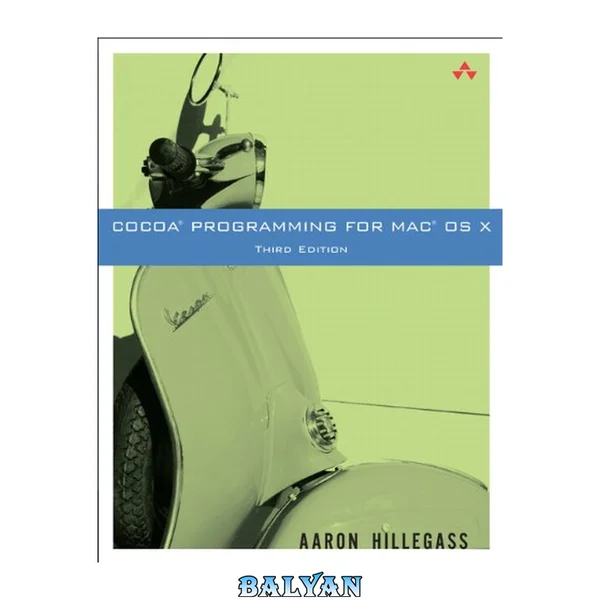
I own this book and worked through it fairly diligently. Having come out the other end of the book, I would say it provides a good foundation for continuing on, but I don't think this book is enough to start writing your own apps without some more assistance. I think it *almost* gets you there, but falls short in a couple of areas. I think if you buy this book with the intention of picking up one or more additional books to continue on, then this book will serve it's purpose, but I do think if you try and start programming just from this book, you'll be a bit lost when your done. I myself picked up Cocoa Design Patterns, which seems like a good next step so far. It provides a LOT less hand holding, but if you've gone through Hillebrands book, you should be ready for that anyway. I think if I could sit down with Hillebrand and make any recommendation it would be to either have put more into this book, or break it up into 2-3 books, with some additional details along the way. In many cases as I diligently typed in the code examples I was often somewhat lost as I went along. Some things became more clear as the book progressed, but others remained somewhat murky. For instance the chapter on drag-drop. There was a lot of code there, and not a lot of explanation. I see that there is a follow up book to this by him coming out in July, which I intend to purchase, and I recently bought his iPhone book, which while I haven't gone through it in detail appears to be improved over this in it's flow, or perhaps it's just that I know more about Cocoa in general that it's not overwhelming me. I can't say how difficult this book would have been without extensive OOP experience, but if your considering this as a starting point for programming, don't. This book, Cocoa itself is *not* for beginners. I would say you really need to cut your teeth with some general OOP concepts and put your time into programming them before you try and tackle Cocoa. PHP could be a pretty good way to build up your knowledge. It would allow you to learn programming and OOP while not getting bogged down with having to try and tackle interfaces, messaging etc. If you do already have oop experience, but don't know Objective-C, it's certainly different than other OOP languages I've used (Java, C++, PHP) but it's more syntactical than anything else. This book provides a decent primer on Obj-C and by the time I got past those primer chapters I was pretty set with regard to Obj-C itself. I did really like this book. I have a good foundation on Cocoa now and while I am still in need of more books to start filling in the gaps and continue on my journey, this served as a good start for that, and I would most definately recommend this book. You should definately goto the book website and download the example/source code, I found on some of the challenges that I didn't figure out, it was helpful to see his examples and then move on, rather than spend time trying to find the needle in the haystack, at some point you do need to punt and move on... It's worth mentioning that while I'd say 80-85% of what he talks about re: the Interface Builder was still relevant, this being from 2008, the IB has changed with the most recent version just enough that when I started this book as a complete newbie, I got stuck in a couple places until I could gather the knowledge to understand where his instructions were no longer accurate. In the end for me some googling solved my hickups. So for anyone starting with this book and using XCode 3.2 or newer, know that you'll find a few things work differently, and also know that once you see what you need to do differently and understand it, the differences are pretty minor, it's just when your totally new and don't know the IB well enough, it can seem impossible at first. A little perseverance will get you through. It would have been nice if the author had provided a bit more updates on his website about the differences, he gave some info, but it was pretty cursory. FInally, even with my criticisms, I want to say I didn't intend the criticisms to be reasons not to get the book, but rather heads-up about where you would need to find other resources to keep you chugging along, and also to say that as good as this book is, I do think additional more advanced books are required afterward to ensure you move along on your journey. The best-selling introduction to Cocoa, once again updated to cover the latest Mac programming technologies, and still enthusiastically recommended by experienced Mac OS X developers. Aarons book is the gold standard for Mac OS X programming booksbeautifully written, and thoughtfully sculpted. The best book on Leopard development. Scott Stevenson, (http://www.theocacao.com) www.theocacao.com This is the first book Id recommend for anyone wanting to learn Cocoa from scratch. Aarons one of the few (perhaps only) full-time professional Cocoa instructors, and his teaching experience shows in the book. Tim Burks, software developer and creator of the Nu programming language, (http://www.programming.nu) www.programming.nu If youre a UNIX or Windows developer who picked up a Mac OS X machine recently in hopes of developing new apps or porting your apps to Mac users, this book should be strongly considered as one of your essential reference and training tomes. Kevin H. Spencer, Apple Certified Technical Coordinator If youre developing applications for Mac OS X, Cocoa Programming for Mac OS X, Third Edition, is the book youve been waiting to get your hands on. If youre new to the Mac environment, its probably the book youve been told to read first. Covering the bulk of what you need to know to develop full-featured applications for OS X, written in an engaging tutorial style, and thoroughly class-tested to assure clarity and accuracy, it is an invaluable resource for any Mac programmer. Specifically, Aaron Hillegass introduces the three most commonly used Mac developer Xcode, Interface Builder, and Instruments. He also covers the Objective-C language and the major design patterns of Cocoa. Aaron illustrates his explanations with exemplary code, written in the idioms of the Cocoa community, to show you how Mac programs should be written. After reading this book, you will know enough to understand and utilize Apples online documentation for your own unique needs. And you will know enough to write your own stylish code. Updated for Mac OS X 10.4 and 10.5, this revised edition includes coverage of Xcode 3, Objective-C 2, Core Data, the garbage collector, and CoreAnimation. The best-selling introduction to Cocoa, once again updated to cover the latest Mac programming technologies, and still enthusiastically recommended by experienced Mac OS X developers. "Aaron's book is the gold standard for Mac OS X programming books--beautifully written, and thoughtfully sculpted. The best book on Leopard development." --Scott Stevenson, www.theocacao.com "This is the first book I'd recommend for anyone wanting to learn Cocoa from scratch. Aaron's one of the few (perhaps only) full-time professional Cocoa instructors, and his teaching experience shows in the book." --Tim Burks, software developer and creator of the Nu programming language, www.programming.nu "If you're a UNIX or Windows developer who picked up a Mac OS X machine recently in hopes of developing new apps or porting your apps to Mac users, this book should be strongly considered as one of your essential reference and training tomes." --Kevin H. Spencer, Apple Certified Technical Coordinator If you're developing applications for Mac OS X, Cocoa® Programming for Mac® OS X, Third Edition, is the book you've been waiting to get your hands on. If you're new to the Mac environment, it's probably the book you've been told to read first. Covering the bulk of what you need to know to develop full-featured applications for OS X, written in an engaging tutorial style, and thoroughly class-tested to assure clarity and accuracy, it is an invaluable resource for any Mac programmer. Specifically, Aaron Hillegass introduces the three most commonly used Mac developer tools: Xcode, Interface Builder, and Instruments. He also covers the Objective-C language and the major design patterns of Cocoa. Aaron illustrates his explanations with exemplary code, written in the idioms of the Cocoa community, to show you how Mac programs should be written. After reading this book, you will know enough to understand and utilize Apple's online documentation for your own unique needs. And you will know enough to write your own stylish code. Updated for Mac OS X 10.4 and 10.5, this revised edition includes coverage of Xcode 3, Objective-C 2, Core Data, the garbage collector, and CoreAnimation Provides Step-by-step Instructions For Learning Cocoa, Discussing Such Topics As Objective-c, Controls, Helper Objects, Archiving, Nib Files And Nswindowcontroller, And Creating Interface Builder Palettes. Preface To The Third Edition Acknowledgments Chapter 1. Cocoa: What Is It? Chapter 2. Let's Get Started Chapter 3. Objective-c Chapter 4. Memory Management Chapter 5. Target/action Chapter 6. Helper Objects Delegates Chapter 7. Key-value Coding Key-value Observing Chapter 8. Nsarraycontroller Chapter 9. Nsundomanager Chapter 10. Archiving Chapter 11. Basic Coredata Chapter 12. Nib Files And Nswindowcontroller Chapter 13. User Defaults Chapter 14. Using Notifications Chapter 15. Using Alert Panels Chapter 16. Localization Chapter 17. Custom Views Chapter 18. Images And Mouse Events Chapter 19. Using Nsopenpanel Chapter 20. Keyboard Events Chapter 21. Drawing Text With Attributes Chapter 22. Pasteboards And Nil-targeted Actions Chapter 23. Categories Chapter 24. Drag-and-drop Chapter 25. Nstimer Chapter 26. Sheets Chapter 27. Creating Nsformatters Chapter 28. Printing Chapter 29. Web Service Chapter 30. View Swapping Chapter 31. Core Data Relationships Chapter 32. Garbage Collection Chapter 33. Core Animation Chapter 34. Cocoa And Opengl Chapter 35. Nstask Chapter 36. The End Index. Aaron Hillegass. Includes Index.