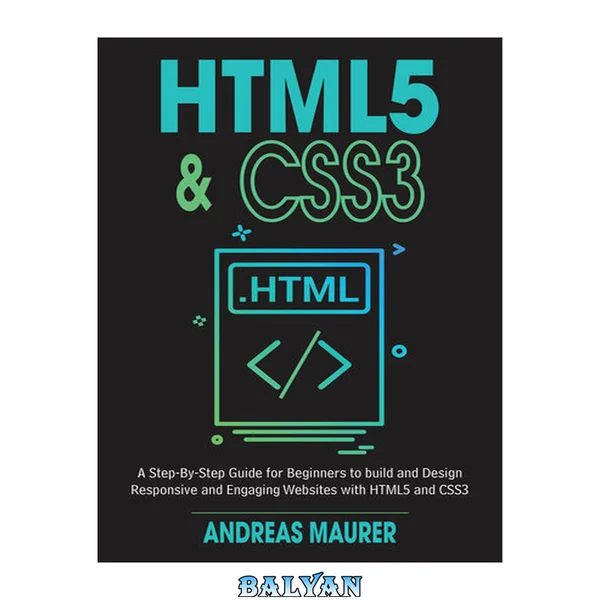
Combining theory and practice, __Website Design and Development with HTML5 and CSS3__ is aimed at both beginners who want to design their first website, and experienced developers who want to consolidate their technical skills. This book addresses the theoretical aspects of HTML5 and CSS3, including: HTML elements, semantic containers, semantic text formatting, multimedia elements, forms, tables, definition and integration of CSS styles, text formatting, and container and box styles. It also encompasses a practical section which presents the process of creating a website, as well as the key rules to apply in order to not only achieve project success, but also to meet user needs. Illustrated by numerous examples, this book includes corrected practical work, structured according to an evolutionary logic ranging from the design of a simple HTML5 page to the creation of a professional website. Cover Half-Title Page Title Page Copyright Page Contents Foreword Preface Chapter 1. The Web and its Future 1.1. Background 1.1.1. The 1960s: context of the Cold War 1.1.2. The 1970s and 1980s: birth of the TCP/IP protocol 1.1.3. The 1980s, 1990s and 2000s: evolution of the Internet to the WWW 1.2. Phases of evolution of the Web 1.2.1. 1991–1999: Web 1.0, static or passive? 1.2.2. 2000–2010: Web 2.0, collaborative or social? 1.2.3. 2010–2020: Web 3.0, semantic or smart? 1.2.4. Since 2020: Web 4.0, intelligent 1.3. Web application architecture 1.3.1. The three levels of abstraction of an application 1.3.2. One-tier architecture 1.3.3. Two-tier architecture 1.3.4. Three-tier architecture 1.3.5. n-tier architecture Chapter 2. The Language of the Web: HTML5 2.1. Overview 2.1.1. Origins of HTML5 2.1.2. Syntax and lexicon of the HTML5 language 2.1.3. Basic rules of HTML5 2.1.4. Working environment 2.2. Structure of an HTML5 document 2.3. Structuring the content of a web page 2.3.1. The element 2.3.2. The element 2.3.3. The new elements of HTML5 2.4. Text organization 2.4.1. Paragraphs and texts 2.4.2. Bulleted lists 2.4.3. Titles 2.5. Creating hyperlinks 2.5.1. Inserting a hyperlink: the tag 2.5.2. Types of hyperlinks 2.5.3. Adding a tooltip to a link 2.6. Inserting images and multimedia objects 2.6.1. The image 2.6.2. Audio and video media 2.7. Tables 2.7.1. The tag 2.7.2. The tag 2.7.3. The tag 2.7.4. The tag 2.7.5. The tag 2.7.6. The tag 2.7.7. The tag 2.7.8. The tag 2.8. Forms 2.8.1. Benefit of a form 2.8.2. Form construction 2.8.3. The form tag and its variants 2.8.4. Other form tags 2.8.5. Common attributes for form elements 2.8.6. Several new attributes added with HTML5 Chapter 3. Style Sheets: CSS3 3.1. Overview 3.1.1. Origins of CSS3 3.1.2. Syntax and structure of the CSS3 language 3.1.3. Selectors 3.1.4. Values and units used 3.2. Text formatting 3.2.1. Character size 3.2.2. Font type 3.2.3. Italic text 3.2.4. Bold text 3.2.5. Text decoration and underlining 3.2.6. Small capitals 3.2.7. Text coloring 3.2.8. Transforming text to lowercase or uppercase 3.2.9. Indenting the first line of a paragraph 3.2.10. Letter spacing 3.2.11. Word spacing 3.2.12. Paragraph spacing 3.2.13. Horizontal text alignment 3.2.14. Vertical text alignment 3.2.15. Text direction 3.2.16. Text length and height 3.2.17. Floating 3.3. List formatting 3.3.1. Different bullet numbering styles 3.3.2. Graphic style of bullets 3.3.3. Removing lines from a bullet list 3.4. Backgrounds, borders and shadows 3.4.1. Backgrounds 3.4.2. Borders and shadows 3.5. Table formatting 3.5.1. Space between cells 3.5.2. Borders 3.5.3. Empty cells 3.5.4. Caption position 3.6. Layout of the site 3.6.1. Concept of the box model 3.6.2. Block or inline element 3.6.3. Width and height of a box element 3.6.4. Outer margins 3.6.5. Inner margins 3.6.6. Element positioning 3.6.7. Element floating 3.6.8. Element stacking Chapter 4. Design and Creation of a Website 4.1. Process of creating a website 4.1.1. Development 4.1.2. Hosting 4.1.3. Referencing 4.1.4. Updating 4.1.5. Evaluation 4.2. Ergonomics of the website 4.2.1. Concept of ergonomics 4.2.2. Ergonomics criterion 4.2.3. Graphic charter 4.2.4. Mockup 4.2.5. Dimensions of web pages 4.3. Different website types 4.3.1. Search engine/metasearch engine 4.3.2. Web directory 4.3.3. Merchant site (e-commerce) 4.3.4. Educational site (e-learning) 4.3.5. Advertising site Chapter 5. Practical Exercises 5.1. PE1: structure of an HTML5 web page 5.1.1. Purpose 5.1.2. Presentation 5.1.3. Solution 5.2. PE2: simple forms 5.2.1. Purpose 5.2.2. Presentation 5.2.3. Solution 5.3. PE3: table formatting 5.3.1. Purpose 5.3.2. Presentation 5.3.3. Solution 5.4. TP 4: media (image, video and audio) 5.4.1. Purpose 5.4.2. Presentation 5.4.3. Solution 5.5. PE: element positioning 5.5.1. Purpose 5.5.2. Presentation 5.5.3. Solution 5.6. PE6: creating a template model 5.6.1. Purpose 5.6.2. Presentation 5.6.3. Solution 5.7. PE7: creating a website from A to Z 5.7.1. Step 0: purpose of the site 5.7.2. Step 1: functional scope 5.7.3. Step 2: site mockup 5.7.4. Step 3: choosing/defining the graphic charter 5.7.5. Step 4: creating HTML/CSS mockups of the main pages 5.7.6. Step 5: developing the site from mockups References Index Other titles from iSTE in Information Systems, Web and Pervasive Computing
Combining theory and practice, Website Design and Development with HTML5 and CSS3 is aimed at both beginners who want to design their first website, and experienced developers who want to consolidate their technical skills. This book addresses the theoretical aspects of HTML5 and CSS3, including: HTML elements, semantic containers, semantic text formatting, multimedia elements, forms, tables, definition and integration of CSS styles, text formatting, and container and box styles. It also encompasses a practical section which presents the process of creating a website, as well as the key rules to apply in order to not only achieve project success, but also to meet user needs. Illustrated by numerous examples, this book includes corrected practical work, structured according to an evolutionary logic ranging from the design of a simple HTML5 page to the creation of a professional website.