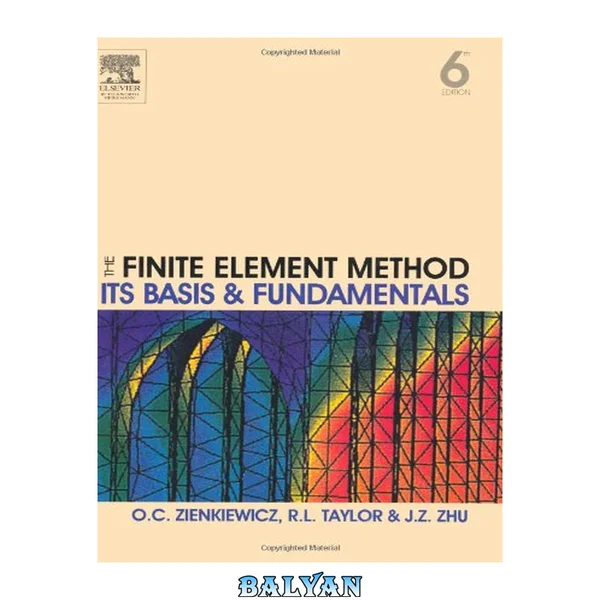
In the years since the fourth edition of this seminal work was published, active research has further developed the Finite Element Method into the pre-eminent tool for the modelling of physical systems. Written by the pre-eminent professors in their fields, this new edition of the Finite Element Method maintains the comprehensive style of the earlier editions and authoritatively incorporates the latest developments of this dynamic field. Expanded to three volumes the book now covers the basis of the method and its application to advanced solid mechanics and also advanced fluid dynamics. Volume 1: The Basis is intended as a broad overview of the Finite Element Method. Aimed at undergraduates, postgraduates and professional engineers, it provides a complete introduction to the method. Volume 2 and Volume 3 of the Finite Element Method cover non-linear solid and structural mechanics and fluid dynamics respectively. Both are essential reading for postgraduate students and professional engineers working in these disciplines. New material on recovery, accuracy, error estimates and adaptivity.Increased coverage of mixed and hybrid methods including the Discontinuous Galerkin and Enhanced Strain Methods.Expanded chapter on incompressible behaviour and stabilization procedures. In The Years Since The Fourth Edition Of This Seminal Work Was Published, Active Research Has Developed The Finite Element Method Into The Pre-eminent Tool For The Modelling Of Physical Systems. Written By The Pre-eminent Professors In Their Fields, This New Edition Of The Finite Element Method Maintains The Comprehensive Style Of The Earlier Editions And Authoritatively Incorporates The Latest Developments Of This Dynamic Field. Expanded To Three Volumes The Book Now Covers The Basis Of The Method And Its Application To Advanced Solid Mechanics And Also Advanced Fluid Dynamics. Volume Two: Solid And Structural Mechanics Is Intended For Readers Studying Structural Mechanics At A Higher Level. Although It Is An Ideal Companion Volume To Volume One: The Basis, This Advanced Text Also Functions As A Stand-alone Volume, Accessible To Those Who Have Been Introduced To The Finite Element Method Through A Different Route. Volume 1 Of The Finite Element Method Provides A Complete Introduction To The Method And Is Essential Reading For Undergraduates, Postgraduates And Professional Engineers. Volume 3 Covers The Whole Range Of Fluid Dynamics And Is Ideal Reading For Postgraduate Students And Professional Engineers Working In This Discipline. Coverage Of The Concepts Necessary To Model Behaviour, Such As Viscoelasticity, Plasticity And Creep, As Well As Shells And Plates.up-to-date Coverage Of New Linked Interpolation Methods For Shell And Plate Formations.new Material On Non-linear Geometry, Stability And Buckling Of Structures And Large Deformations. In the years since the fourth edition of this seminal work was published, active research has developed the Finite Element Method into the pre-eminent tool for the modelling of physical systems. Written by the pre-eminent professors in their fields, this new edition of the Finite Element Method maintains the comprehensive style of the earlier editions and authoritatively incorporates the latest developments of this dynamic field. Expanded to three volumes the book now covers the basis of the method and its application to advanced solid mechanics and also advanced fluid dynamics. Volume Fluid Dynamics is intended for readers studying fluid mechanics at a higher level. Although it is an ideal companion volume to Volume The Basis, this advanced text also functions as a "stand-alone" volume, accessible to those who have been introduced to the Finite Element Method through a different route. Volume 1 of the Finite Element Method provides a complete introduction to the method and is essential reading for undergraduates, postgraduates and professional engineers. Volume 2 concentrates on non-linear solid and structural mechanics and is ideal for postgraduate and professional engineers working in this discipline. Coverage of the whole range of fluid dynamics - including incompressible slow viscous flow, high-speed supersonic flows, shallow water flow, ocean waves, and metal and plastic forming.Up-to-date material on the Characteristic Galerkin Method.New methodologies for dealing with supersonic and hypersonic behaviours. Volume 2 considers more advanced problems in solid mechanics. This volume can be used by investigators familiar with the finite element method in general terms and introduces them here to the subject of specialized topics in solid mechanics. Two main subject areas in solid mechanics are covered: non-linear problems and plates and shells. This volume concludes with a chapter on Computer Procedures, in which we describe application of the basic program presented in v. 1 to solve non-linear problems Volume 1 provides the general basis applicable to linear problems in many fields whilst the second and third volumes are devoted to more advanced topics in solid and fluid mechanics, respectively. This volume will help to introduce postgraduate students, researchers and practioners to the modern concepts of finite element methods. It stresses the relationship between the finite element method and the more classic finite difference and boundary solution methods .. Ths first of a three-volume set on the finite element method, which has developed into a tool for the modelling of physical systems, this new edition incorporates new and expanded material on recovery, error estimates and mixed and hybrid methods Volume 3 is devoted entirely to fluid mechanics and uses in the main the methods introduced in Volume 1. However, it enlarges these to deal with the non-self-adjoint problems of convection which are essential to fluid mechanics problems v. 1. The basis. v. 2. Solid mechanics. v. 3. Fluid dynamics.