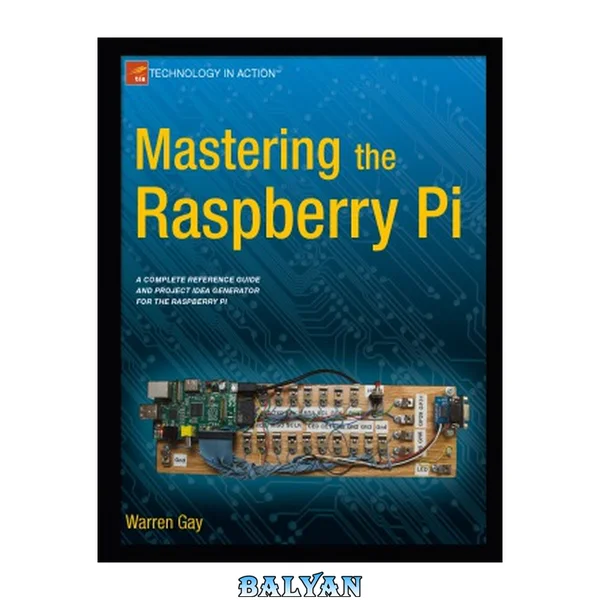
The Raspberry Pi is deceptively simple. Plug it in, boot it up, and use it as a personal computer, or attach a million gizmos and modules and invent something new and amazing. Either way, what it can actually do is not simple, and you should know exactly what the Raspberry Pi hardware is all about. Raspberry Pi Hardware Reference, from Mastering the Raspberry Pi, is the hardware guide you need on your desk or workbench. Every detail is covered: from power to memory, from the CPU to working with USB. You'll find all the details about working with both wired and wireless Ethernet, SD cards, and the UART interface. The GPIO chapter is invaluable, covering power budgeting, access, and even small but important details like the correct usage of sudo when working with GPIO pins. You'll also find details about the 1-Wire driver, the I2C bus, and the SPI bus. If you need to know anything about your Raspberry Pi's hardware, you will find it here, in Raspberry Pi Hardware Reference. You probably already know that the Raspberry Pi is an excellent teaching tool. If you want to teach Linux basics or Python programming or basic electronics, it's a great place to start. But what if you are an electronics engineer or a Linux systems administrator or a very experienced maker? You want to know all of the details and inner working of the Raspberry Pi -- how to (figuratively or maybe even literally) make it get up and dance without wading through basics and introductory material. If you want to get right into the pro-level guts of the Raspberry Pi, complete with schematics, detailed hardware explanations, messing around with runlevels, reporting voltages and temperatures, and recompiling the kernel, then Mastering the Raspberry Pi is just the book you need. Along with all of the thorough explanations of hardware and operating system, you'll also get a variety of project examples and explanations that you can tune for your own project ideas. You'll find yourself turning to Mastering the Raspberry Pi over and over again for both inspiration and reference. Whether you're an electronics professional, an entrepreneurial maker, or just looking for more detailed information on the Raspberry Pi, this is exactly the book for you. Warren W. Gay. Includes Bibliographical References And Index.