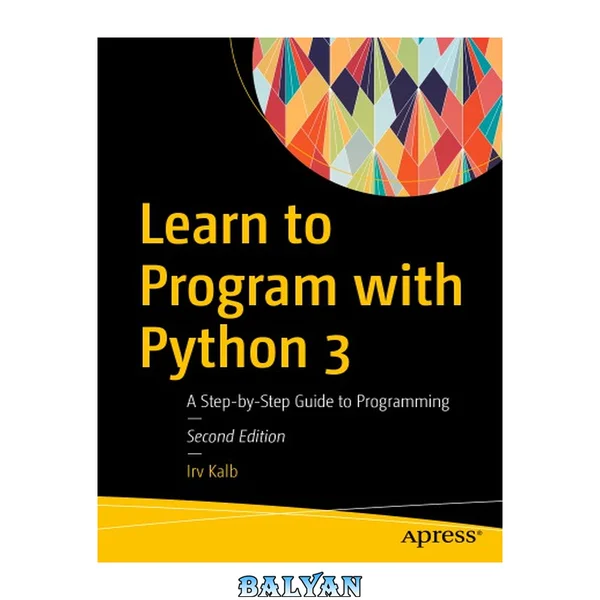
Move from zero knowledge of programming to comfortably writing small to medium-sized programs in Python. Fully updated for Python 3, with code and examples throughout, the book explains Python coding with an accessible, step-by-step approach designed to bring you comfortably into the world of software development. Real–world analogies make the material understandable, with a wide variety of well-documented examples to illustrate each concept. Along the way, you’ll develop short programs through a series of coding challenges that reinforce the content of the chapters. Learn to Program with Python 3 guides you with material developed in the author's university computer science courses. The author's conversational style feels like you're working with a personal tutor. All material is thoughtfully laid out, each lesson building on previous ones. What You'll Learn Understand programming basics with Python, based on material developed in the author's college courses Learn core concepts: variables, functions, conditionals, loops, lists, strings, and more Explore example programs including simple games you can program and customize Build modules to reuse your own code Who This Book Is For This book assumes no prior programming experience, and would be appropriate as text for a high school or college introduction to computer science. Python is a general-purpose programming language. That means it was designed and developed to write software for a wide variety of disciplines. Python has been used to write applications to solve problems in biology, chemistry, financial analysis, numerical analysis, robotics, and many other fields. It is also widely used as a scripting language for use by computer administrators, who use it to capture and replay sequences of computer commands. It is different from a language like HTML (HyperText Markup Language), which was designed for the single purpose of allowing people to specify the layout of a web page.Once you learn the basic concepts of a programming language like Python, you find that you can pick up a new computer languages very quickly. No matter what the language (and there are many) the underlying concepts are very similar. The key things that you learn about-variables, assignment statements, if statements, while loops, function calls-are all concepts that are easily transferable to any other programming language. Installing Python Python was created in the 1990s by Guido van Rossum. He is affectionately known as Python's Benevolent Dictator for Life. The language has two current versions: 2.7 and 3.6. Version 2.7 is still widely used, but its "end of life" has recently been announced. Therefore, this version of the book will use the newer Python 3, as it is known. With respect to the contents of this book, there are only a few differences between the versions of the language. Where appropriate, I point out how something presented in Python 3 was handled in Python 2.Python is maintained as an open source project by a group called the Python Software Foundation. Because it is open source, Python is free. There is no single company that owns and/or sells the software. You can get everything you need to write and run all the Python programs in this book by simply downloading Python from the Internet. I'll explain how you can get it and install it.The center of the Python universe is at www.python.org.Bring up the browser of your choice and go to that address. The site changes over time, but the essential functionality should remain the same. On the main page, there should be a Downloads button or rollover. Once you're in the Downloads area, you Chapter 1 GettinG Started Front Matter ....Pages i-xvii Getting Started (Irv Kalb)....Pages 1-9 Variables and Assignment Statements (Irv Kalb)....Pages 11-49 Built-in Functions (Irv Kalb)....Pages 51-65 User-Defined Functions (Irv Kalb)....Pages 67-102 if, else, and elif Statements (Irv Kalb)....Pages 103-141 Loops (Irv Kalb)....Pages 143-182 Lists (Irv Kalb)....Pages 183-223 Strings (Irv Kalb)....Pages 225-243 File Input/Output (Irv Kalb)....Pages 245-282 Internet Data (Irv Kalb)....Pages 283-299 Data Structures (Irv Kalb)....Pages 301-341 Where to Go from Here (Irv Kalb)....Pages 343-348 Back Matter ....Pages 349-354 Move from zero knowledge of programming to comfortably writing small to medium-sized programs in Python. Fully updated for Python 3, with code and examples throughout, the book explains Python coding with an accessible, step-by-step approach designed to bring you into the world of software development. Real-world scenarios make the material understandable, with a wide variety of well-documented examples to illustrate each concept. Along the way, you'll develop short programs through a series of coding challenges that reinforce the content of the chapters Fully updated for Python 3, with code and examples throughout, this book explains Python coding with an accessible, step-by-step approach designed to bring you comfortably into the world of software development. -- Edited summary from book