
Artificial Intelligence: Structures and Strategies for Complex Problem Solving (6th Edition)
Freida McFadden، George F. Luger, LUGER, Stubblefield, William A. Stubblefieldقیمت نهایی
- تخفیف زماندار−۵٬۰۰۰ تومان
۵٬۰۰۰ تومان صرفهجویی نسبت به قیمت اصلی
نسخه اصلی و اورجینال
بلافاصله پس از خرید، فایل کتاب روی دستگاه شما آمادهٔ دانلود است.
مشخصات کتاب
- سال انتشار
- ۲۰۰۸
- فرمت
- زبان
- انگلیسی
- حجم فایل
- ۴٫۲ مگابایت
- شابک
- 9781803144375، 9781803144382، 1803144378، 1803144386، 9780132090018، 9780321545893، 0132090015، 0321545893
دربارهٔ کتاب
Artificial Intelligence
Structures and Strategies for Complex Problem Solving, Sixth Edition
by George F Luger
This accessible, comprehensive book captures the essence of artificial intelligence -- solving the complex problems that arise wherever computer technology is applied. With his signature enthusiasm, George Luger demonstrates numerous techniques and strategies for addressing the many challenges facing computer scientists today. Diverse topics on this exciting and ever-evolving field range from perception and adaptation using neural networks and genetic algorithms, intelligent agents with ontologies, automated reasoning, natural language analysis, and stochastic approaches to machine learning.
This book is ideal for a one - or two-semester university course on AI.
New to this edition:
- A new chapter on stochastic approaches to machine learning, including first-prder Bayesian networks, variants of hidden Markov models, inference with Markov random fields and loopy belief propagation.
- Presentation of parameter fitting with expectation maximization learning and structure learning using Markov chain Monte Carlo sampling. Use of Markov decision processes in reinforcement learning.
- Presentation of agent technology and the use of ontologies.
- Natural language processing with dynamic programming (the Earley parser) and other probabilistic parsing techniques including Viterbi.
- A new supplemental programming book is available: AI Algorithms in Prolog, Lisp, and JavaTM. Available online and in print, this book demonstrates these languages as tools for building many of the algorithms presented throughout Luger's AI book.
"There are many ideas in this area that students often find difficult; the clarity and precision of Luger's exposition is informed by sharp, incisive examples with straightforward graphical components."
-- Joseph Lewis, San Diego State University
"The book is a perfect complement to an AI course. It gives readers both an historical point of view and a practical guide to all the techniques. It is THE book I would recommend as an introduction to this field."
-- Pascal Rebreyend, Dalarna University
"The style of writing and comprehensive treatment of the subject matter makes this a valuable addition to the AI literature."
-- Malachy Eaton, University of Limerick
George Luger is currently a Professor of Computer Science, Linguistics, and Psychology at the University of New Mexico. He received his Ph.D. from the University of Pennsylvania and spent five years researching and teaching at the Department of Artificial Intelligence at the University of Edinburgh.
In this accessible, comprehensive text, George Luger captures the essence of artificial intelligence-solving the complex problems that arise wherever computer technology is applied. Key representation techniques including logic, semantic and connectionist networks, graphical models, and many more are introduced. Presentation of agent technology and the use of ontologies are added. A new machine-learning chapter is based on stochastic methods, including first-order Bayesian networks, variants of hidden Markov models, inference with Markov random fields and loopy belief propagation. A new presentation of parameter fitting with expectation maximization learning and structure learning using Markov chain Monte Carlo sampling. Use of Markov decision processes in reinforcement learning. Natural language processing with dynamic programming (the Earley parser) and other probabilistic parsing techniques including Viterbi, are added. A new supplemental programming book is available online and in print: "AI Algorithms in Prolog, Lisp and Java (TM). "References and citations are updated throughout the Sixth Edition. For all readers interested in artificial intelligence "Artificial Intelligence: Structures and Strategies for Complex Problem Solving is ideal for a one or two semester university course on AI, as well as an invaluable reference for researchers in the field or practitioners wishing to employ the power of current AI techniques in their work."--BOOK JACKET.کتابهای مشابه

Artificial intelligence : structures and strategies for complex problem solving
۴۹٬۰۰۰ تومان
Artificial intelligence : structures and strategies for complex problem solving
۴۹٬۰۰۰ تومان
هوش مصنوعی: ساختارها و استراتژیها برای حل مسائل پیچیده
۴۹٬۰۰۰ تومان
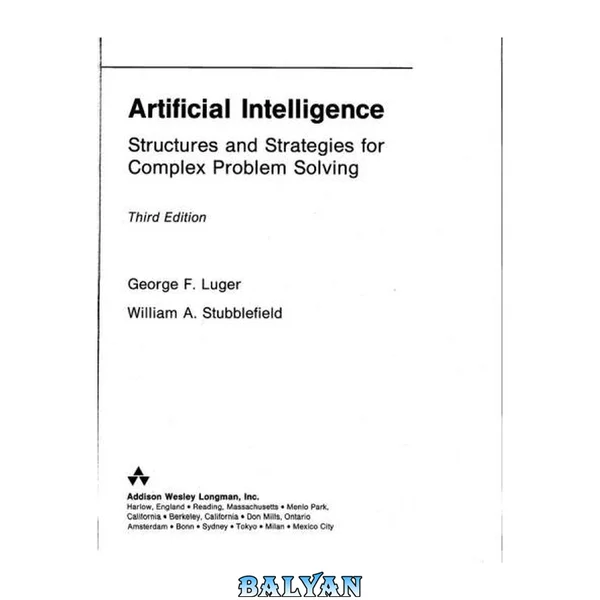
Artificial Intelligence, Structures And Strategies For Complex Problem Solving
۴۹٬۰۰۰ تومان
Artificial Intelligence. Structures and Strategies for Complex Problem Solving
۴۹٬۰۰۰ تومان
Artificial Intelligence: Structures and Strategies for Complex Problem Solving (5th Edition)
۴۹٬۰۰۰ تومان
Artificial Intelligence: Structures and Strategies for Complex Problem Solving (5th Edition)
۴۹٬۰۰۰ تومان
هوش مصنوعی: ساختارها و استراتژیها برای حل مسائل پیچیده (ویرایش سوم)
۴۹٬۰۰۰ تومان
Artificial Intelligence: Structures and Strategies for Complex Problem Solving (5th Edition)
۴۹٬۰۰۰ تومان
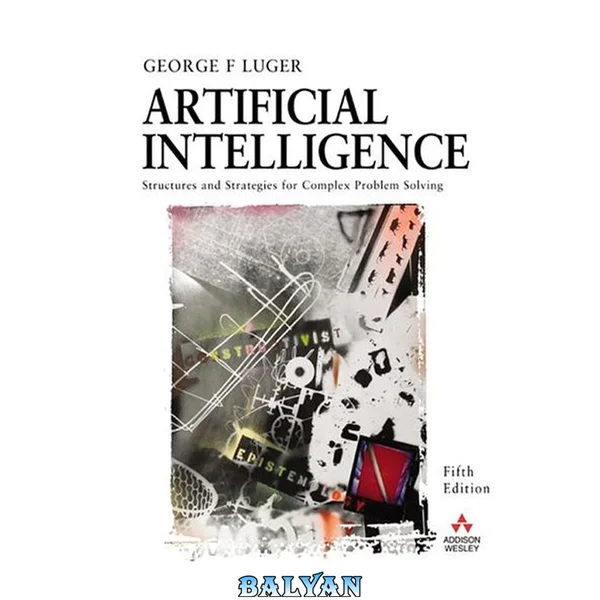
هوش مصنوعی: ساختارها و استراتژیها برای حل مسائل پیچیده (ویرایش پنجم)
۴۹٬۰۰۰ تومان
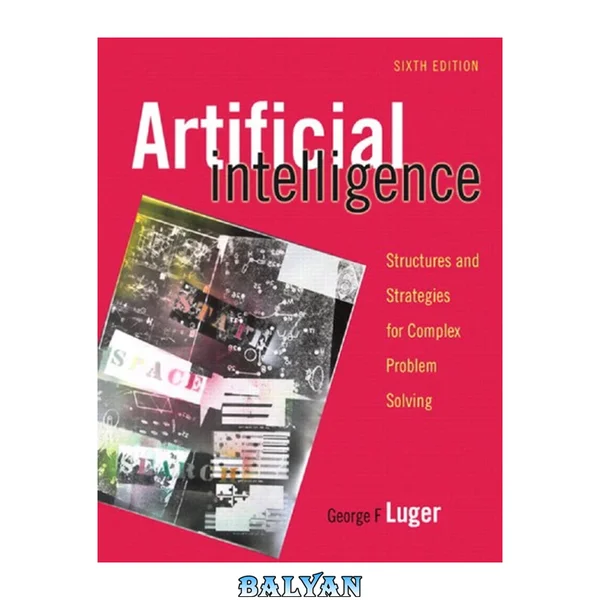
Artificial Intelligence. Structures and Strategies for Complex Problem Solving. Sixth Edition
۴۹٬۰۰۰ تومان
Artificial intelligence: Structure and stretegies for complex problem solving
۴۹٬۰۰۰ تومان
قیمت نهایی
۴۴٬۰۰۰ تومان